
Vertigo & BPPV Treatment
What is BPPV?
BPPV stands for Benign Paroxysmal Positional Vertigo. You may have heard other people refer to this before as “crystals/rocks are loose in my inner ear”.
Normally, there are otoconia (“ear crystals or ear rocks”) that “live” in a specific area of the vestibular organ called the utricle and saccule. The utricle and saccule together are called the “otolith organs”. These “crystals” or otoconia have a very special job of helping our vestibular organ sense linear movement (up/down, forward/backward), head tilt and gravity. Exactly how they do this is a topic for another day.
In BPPV, these otoconia have somehow found their way in to the semicircular canal. The ends of each semicircular canal connect to the utricle. Otoconia can detach from the floor of the utricle, and if this happens and your head is moved in such a way that the otoconia float in to the semicircular canal, they can become “stuck” here in the semicircular canal which is not where they belong. When you move your head/change your body position while otoconia are in your semicircular canal, these otoconia can stimulate the vestibular organ in a dysfunctional way which typically results in a transient sensation of vertigo or dizziness.
It is very prevalent - occurring in approximately 10% of the population
** for more information regarding vestibular system anatomy - please see the page on vestibular rehabilitation.
Why does BPPV happen?
Occasionally BPPV will occur after a fall or trauma to the body/head. In this instance, we can assume that some otoconia may have been forcefully dislodged from the utricle and found their way into the semicircular canal(s).
Many times it can occur with aging. There filaments, as well as the otoconia themselves, can break down. This can lead to fragments breaking away from the saccule (where they belong).
Sometimes we don’t really know why it happened, but here are some diagnoses that are associated with an increased occurrence of BPPV:
thyroid disease
inner ear damage/disease
diabetes
hypocholesterolemia
high blood pressure
osteoporosis/osteopenia
migraine
What is Vertigo?
Vertigo is a symptom, not a diagnosis. It is a symptom that is a false sensation of movement of either your environment or yourself. It does not have to be a spinning sensation, although it is common that it is. This false sensation of movement can also be a sway or a drop, etc.
Vertigo is typically caused by some sort of vestibular dysfunction, one of which is BPPV. However, it is important to note that not all vertigo is BPPV, and not all BPPV results in symptoms of vertigo. There are some people who don’t have the intense vertigo that many feel when provoking their BPPV with positional changes.
What are the symptoms of BPPV? How do I know if I have BPPV?
Typically, symptoms include vertigo/dizziness sensations that are provoked by a change in position, and last for less than 1 minute. It is possible for vertigo to continue for more than 1 minute if you remain in the position that caused the vertigo to onset, however once you get out of that position the vertigo from BPPV typically goes away. This happens because certain movements of the head cause those crystals/otoconia to float in the canal which stimulates the vestibular system in a way that is dysfunctional.
Common positional changes that can provoke the symptoms of BPPV include:
getting in/out of bed or rolling in bed
getting up from a recliner or couch
reaching for objects overhead/looking overhead
activities where you tilt your head up like washing your hair or putting in eye drops
working under the car/carpentry
reclining in the dental chair
bending over to pick something up off the floor
Not everyone feels a sense of vertigo with positional changes. Some people have what we call “vestibular agnosia” where they do not feel that vertigo. Other symptoms of BPPV can be impaired balance or falls.
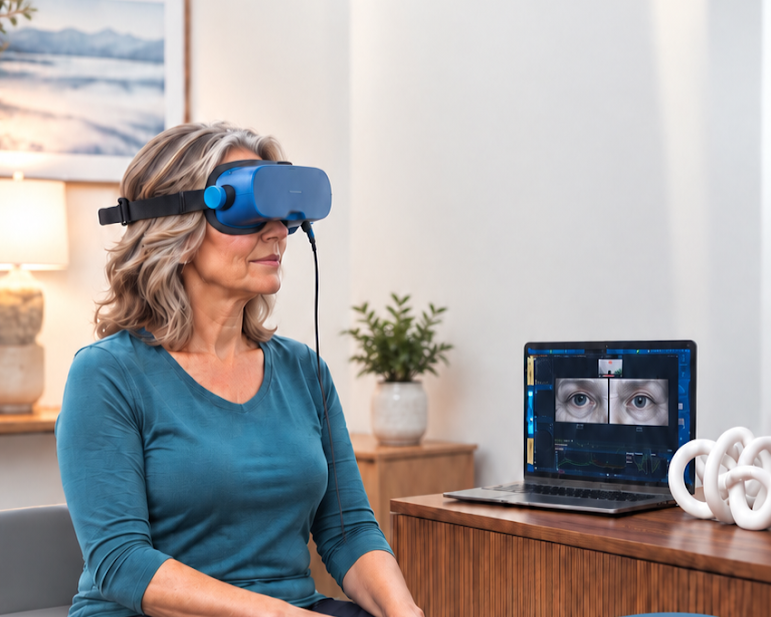
A practitioner can tell if you have BPPV by positional testing that is designed to place each canal in a position where crystals would float into the canal and elicit vertigo/symptoms ,along with what is called “nystagmus”. Nystagmus is when the eyes move in an uncontrolled way (usually in rapid/repetitive manner). Practitioners can decipher where the crystals are located, based on the characteristics of the nystagmus seen during positional testing, combined with symptoms if they are present.
How can Vestibular Physical Therapy treat Vertigo and BPPV?
Vestibular physical therapy for BPPV involves maneuvers that we call “canalith repositioning maneuvers”. During these maneuvers we move the head in a specific and systematic way that encourages the otoconia/crystals to float out of the canal. The maneuvers that we choose depends on which side (right or left) is involved, which canal the crystals are in and where in the canal they are. Maneuvers ONLY treat BPPV and do not treat other causes of vertigo.
It is possible that you have heard of the Epley Maneuver before, however this is only one maneuver to treat one specific kind of BPPV. It does treat the most common type of BPPV, but do not assume that all BPPV can be treated with the Epley Maneuver. Remember that there are 3 canals in each ear (6 total semicircular canals) and different areas within that canal that otoconia can be stuck - so LOTS of possibilities and therefore LOTS of different types of canalith repositioning maneuvers. It is possible to make BPPV worse by trying an Epley Maneuver on you own or when undergoing an Epley Maneuver when it is not indicated. It is important that you undergo assessment and treatment with a skilled practitioner so that you can ensure proper treatment.
Residual dizziness after a successful canalith repositioning maneuver for BPPV is also possible, and this can be treated by a vestibular physical therapist as well.